
About 300 miles south of Arlington — a five-hour drive from the BCA office, if traffic cooperates — a milestone of American freedom was reached. Let’s go back 167 years, just two months after the end of the Civil War.
A man named Gordon Granger, a Major General of the Union army, arrived in Galveston on June 19, 1865, armed with a message and the troops to back it up: anyone who is enslaved in Texas is now free. Today, we remember this day as Juneteenth.
This news was, well, news, to roughly 250,000 Texans who were legally considered property. But it wasn’t news to everyone, especially not former slave owners. Because technically, the same 250,000 people had been free since 1863.
How We Reached Juneteenth
- September 22, 1862 – Abraham Lincoln first unveils the Emancipation Proclamation.
- January 1, 1863 – the Emancipation Proclamation goes into effect. More than 3 million people who are enslaved in Confederate states are now free, and have the legal ground to remain free. Efforts begin to enforce the Proclamation, starting in border states and moving south.
- April 8, 1864 – the 13th Amendment, which bans slavery, passes in the Senate.
- April 9, 1865 – Confederate General Robert E. Lee surrenders to General Ulysses S. Grant. The Civil War is finally ending.
- April 14, 1865 – President Abraham Lincoln is assassinated.
- June 19, 1865 – Major General Gordon Granger arrives in Galveston (the southernmost end of the enforcement effort) with 2,000 Union troops.
- December 6, 1865 – the 13th Amendment is ratified by 27 of then-36 states.
President Abraham Lincoln didn’t live to see Juneteenth, but he put something in motion, something bigger than just one person. After the end of the Civil War, we changed as a nation. We reknit our borders together. We began the process of Reconstruction.
It was a slow change. Freedom didn’t bring equality immediately, or equity, or reparations. Freedom brought pushback, like Jim Crow laws. In too many ways, the harm of racism continues today.
That makes Juneteenth even more important.
This week, if you find yourself with a three-day weekend, I invite you to take a moment to really celebrate the reason. Freedom is a funny thing. It’s so central to our identity as individuals in America, and yet, we can’t really have it without each other. Juneteenth is a celebration of long-delayed freedom for millions of Black Americans. It’s a reminder of the work we still have to do. It’s also a reminder that it takes work, unity, and stubborn optimism to make the world better. To do better for each other. To turn good intentions into action like the “Grandmother of Juneteenth” herself, Ms. Opal Lee, who was largely responsible for bringing national attention to Juneteenth and having it established as a federal holiday.
We hope you celebrate. We sure will, celebrating the power of good, very loudly, because that’s important. Take care, and we’ll see you on Monday.
A Few Juneteenth Facts
- Juneteenth was originally called “Jubilee Day,” until the 1890s
- Texas was the first state to recognize Juneteenth as a holiday in 1939
- Juneteenth became an official federal holiday when President Joe Biden signed the Juneteenth National Independence Day Act in 2021
- Opal Lee, 99, a Ft. Worth native since 1936, was nominated for a Nobel Peace Prize and awarded the Presidential Medal of Freedom for her influential role in establishing Juneteenth as a national holiday
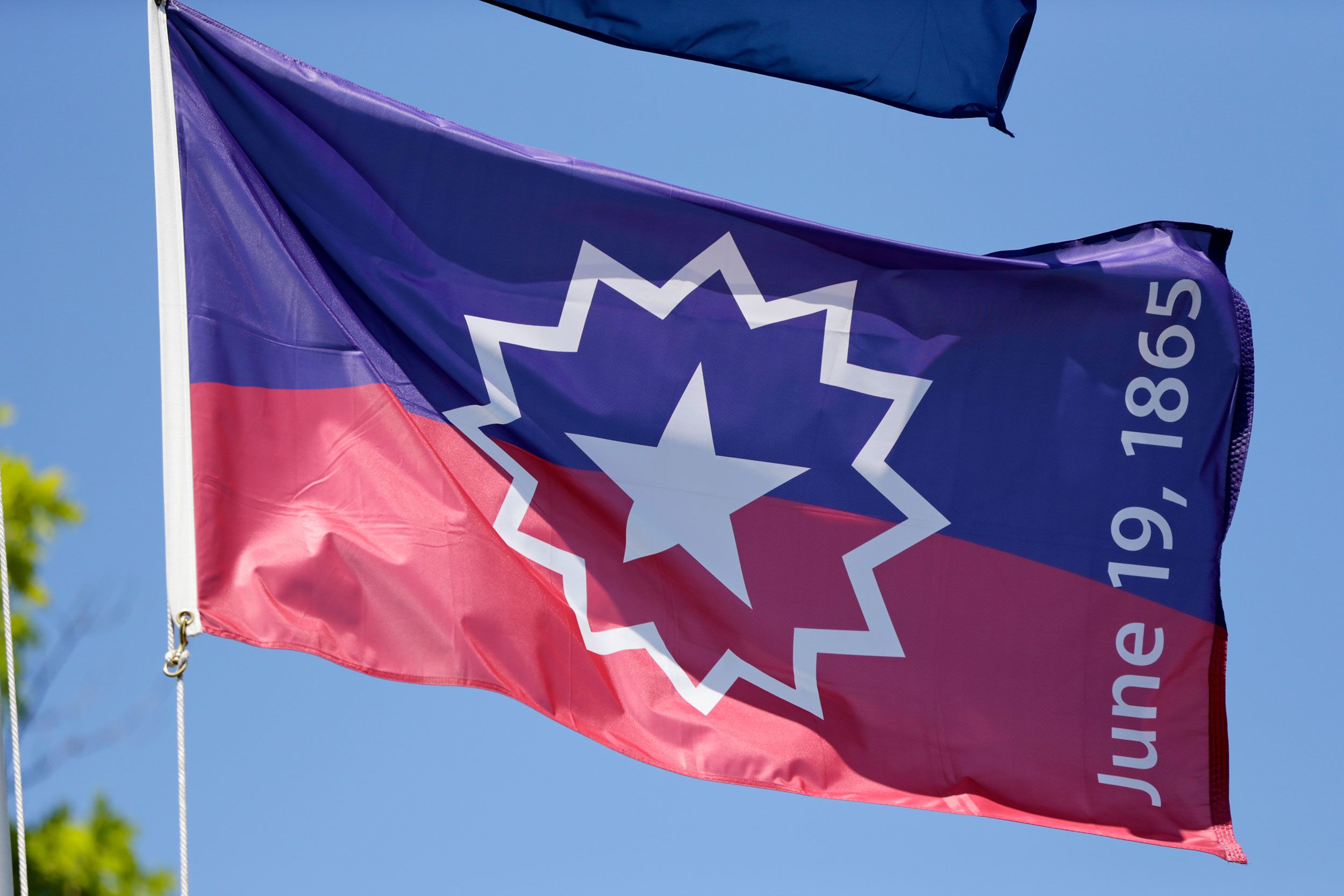
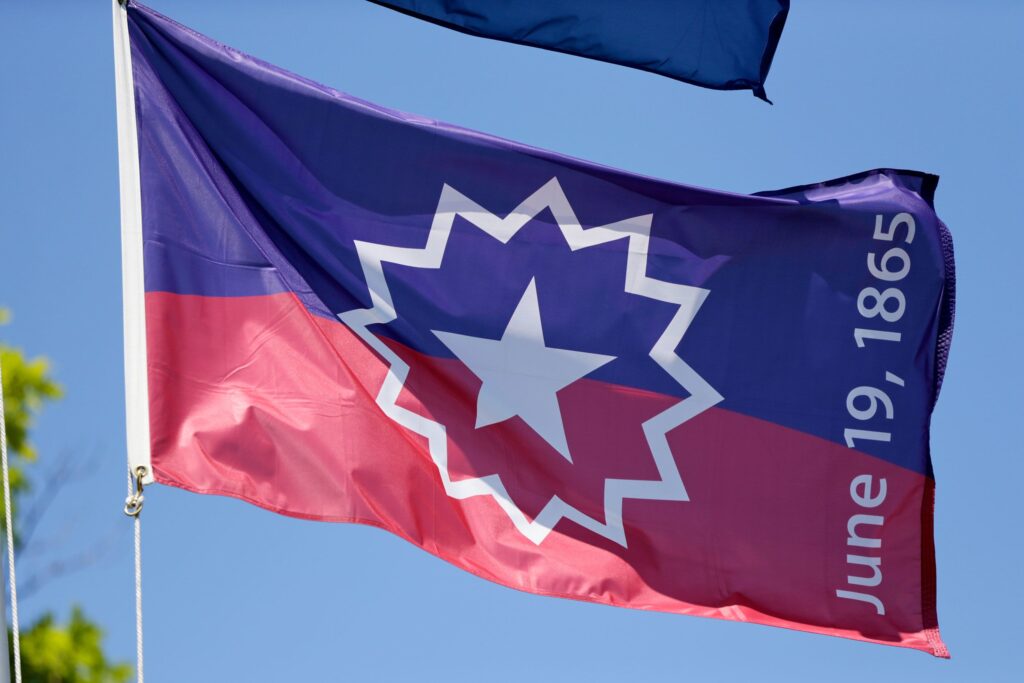
- The star on the Juneteenth Flag represents Texas, the final state to adopt the Emancipation Proclamation
Sources/Further Reading
- https://web.archive.org/web/20071011224131/http://www.history.umd.edu/Freedmen/chronol.htm
- https://www.archives.gov/exhibits/featured-documents/emancipation-proclamation
- https://nmaahc.si.edu/explore/stories/historical-legacy-juneteenth
- https://prologue.blogs.archives.gov/2024/06/12/juneteenth-the-first-commemoration-of-abolition/
- https://nationaljuneteenthmuseum.org/ms-opal-lee
- https://www.womenshistory.org/women-making-history-awards/dr-opal-lee